


About Ruby
Ruby is a variety of the mineral Corundum. Chemically made up of aluminum and oxygen with Chromium as the main element which gives ruby its signature red color. It is commonly a purplish red color with a bright "pigeon blood" red being the most desirable color. Ruby has a hexagonal crystal structure and is a 9 on the Mohs Hardness scale.
Ruby is commonly heated to improve color and is mined in many locations around the world including Asia, Africa and Greenland with the most important deposits being Madagascar, Thailand, and Myanmar. Large high quality stones are rare. Ruby's rarity and beauty cement its reputation as King of Gemstones.


About Sapphire
Sapphire is also a variety of the mineral Corundum. Chemically made up of aluminum and oxygen with a broad color range from colorless to all colors of the spectrum (except for red - then it is called Ruby). Chromium, Iron, Titanium and Vanadium are the main elements which affect its color. Sapphire has a hexagonal crystal structure and is a 9 on the Mohs Hardness scale.
Sapphire is commonly heated to improve color and is mined in many locations around the world including Asia, Africa, North and South America, with important deposits in Sri Lanka, Tanzania and Thailand. Sapphire's durability, availability and beauty keep it in high demand for jewelry lovers around the world.


About Emerald
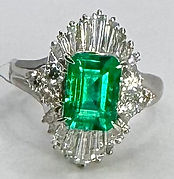
Emerald is a variety of the mineral Beryl. Made up of Berylium, aluminum, silica and oxygen with chromium and sometimes vanadium as coloring elements with a hexagonal crystal structure.
Emerald is a type 3 gemstone, meaning it is commonly found with lots of imperfections or inclusions. It is commonly oiled (fracture filled) to improve it's clarity.
Emerald comes from many sources around the world with important deposits in Colombia, Zambia, Afghanistan, Pakistan, Brazil and Zimbabwe.

About Tanzanite
Tanzanite is a variety of the mineral Zoisite. It is a single source gemstone, found only in Tanzania, Africa. It is commonly heated to improve its color and usually exhibits a beautiful mix of violet and blue colors.
One of the characteristics of Tanzanite is that shows strong pleochroism. This means that the crystal can show different colors when viewed from different angles. Blue and Purple are the usual colors but sometimes you can have blue and green.
Tanzanite was first discovered in 1967 and the deposits are rumored to be nearly depleted. If a new source isn't found, we may see Tanzanite emerge as a treasure for collectors.
